Building Upon Proven Cars towards State-of-the-Art Data: This Progression in Drift Machine Engineering
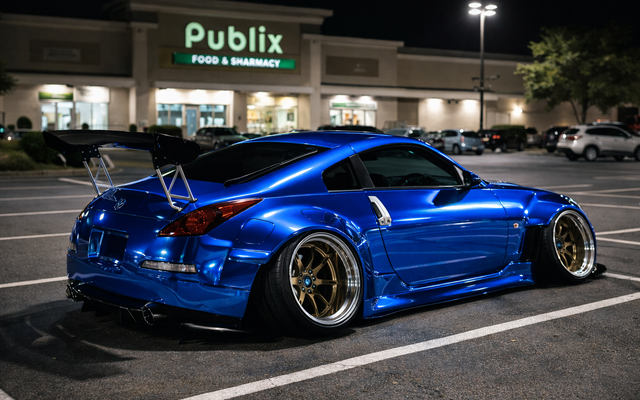
Inside the high-stakes arena of modern pro-level drifting, victory is far more than purely a result of brute horsepower or behind-the-wheel bravado. Instead, it has evolved into a intricate science which requires a scrupulous blend of choosing a inherently capable car, arming it with the highest-quality performance hardware, and, most critically, understanding its live characteristics on the course through cutting-edge drift telemetry software. This definitive guide functions as your master plan from the initial idea of a competition vehicle right through to the final telemetry-optimized tweaks that transform a strong vehicle into a consistent winner. We will delve deep into the art and science of car suspension tuning, illustrating how a state-of-the-art suspension tuning tool like GripDial removes guesswork and offers exceptional visibility into your chassis's true performance.
The cornerstone of any successful competitive sliding vehicle is, without question, the platform itself. Several vehicles have attained renowned status within the international sliding culture due to their built-in balance, robust build quality, and the vast range of aftermarket parts available. Picking the correct starting point is the primary and most significant selection a builder will make. For instance, the BMW's E36 3 Series is universally acknowledged as perhaps the the greatest all-around cars for drifting of history. Its near-perfect evenly distributed mass, combined with a RWD layout and extremely reliable inline-six engines, creates a platform that is simultaneously easy to handle for novices and highly competitive in the control of a expert pilot. The evolution of this concept, the BMW E46 platform, refines these strengths with a more sophisticated structure, broader stance for greater confidence, and even more lock straight from the manufacturer. Another powerful option in the professional circuit is the C6 generation Corvette.
This American track weapon introduces a particular combination of strengths to the drifting discipline, featuring a low-mass alloy structure, a backwards-positioned transaxle that helps create an excellent balance, and the colossal torque of a large-displacement GM LS engine. This fusion renders it an absolute monster on track, able of initiating and holding extended drifts with relatively easy application of throttle. For drivers desiring remarkable value, the Nissan 350Z stands out as a prime candidate. It comes from the factory with a rigid body structure, a competent factory limited-slip differential, and the smooth V6 motor that offers ample horsepower and torque for practicing and progressing in the sport. Its successor, the Nissan 370Z, brings additional refinements in chassis stiffness, steering geometry, and outright powerplant power, cementing its status as a favorite selection among professional pilots. Additional historic cars that merit attention include the nimble unique Mazda FC RX-7, the ubiquitous S13 Silvia/240SX, the torque-rich SN95 generation Mustang, the more recent BMW E90, and the small yet surprisingly engaging and instructive Mazda MX-5. All of these platforms provides a different set of traits, challenges, and possibilities, but they all have in common the basic components essential to become a serious drift car.
However, picking the optimal platform is merely the first step. To access the true potential of every of these machines, major modifications to the steering system and suspension systems are absolutely mandatory. This is where the world of precision tuning hardware comes into vital importance. The single most impactful improvement for a dedicated competition vehicle is the fitting of a drift-spec steering angle kit. These engineered kits, such as those engineered by specialist companies like SLR Speed, are engineered to significantly expand the chassis's maximum steering angle. A standard street car is severely constrained in how far its tires can rotate, a engineering limitation for public road driving. In oversteer driving, however, aggressive steering input is frequently needed to manage and hold a drift. An steering kit exchanges the factory steering knuckles, rod ends, and often A-arms with pieces that permit the front tires to attain steering lock beyond 70 or even 80 degs, versus a average factory angle of around 40 to 50 °.
This immensely expanded steering angle offers the pilot with dramatically more authority during a slide, allowing it to be far easier to start a slide, hold it through a sweeping turn, and transition fluidly from one angle to the other. The difference in handling is truly profound. Combined with a appropriately chosen angle kit is the every bit as essential enhancement to the car's damping system. Store-bought or even high-end street dampers are just not engineered for the particular and harsh demands of sliding. A dedicated pair of coilovers is crucial. These specialized dampers have custom piston tuning and spring stiffness that are tuned for the violent weight transfer that is inherent of sliding. When a driver begins a angle, the car's mass is thrown violently to the outer of the bend. Proper competition coilovers handle this transfer in a consistent fashion, allowing the chassis to stabilize promptly and giving the driver precise feel through the controls and seat. They additionally allow for exact adjustment of stance, damping firmness, and weight balance, which are all integral aspects of dialing in the vehicle's dynamics to a particular venue or competition approach. Together, a high-quality angle modification system and a expertly specified set of drift-spec adjustable dampers are the undeniable physical base upon which all later optimization is constructed.
Once the core hardware is installed, the next critical step in the development is the precise tuning of the vehicle's alignment. This is the world of car suspension tuning, a procedure that can seem daunting to the uninitiated but is, in practice, the defining factor to transforming a collection of high-performance pieces into a cohesive and predictable whole. The most discussed aspect of alignment for drifting is undoubtedly camber angle. Camber angle is the tilt of the rim compared to the perfectly straight plane when viewed from the forward of the chassis. When the top of the tire is angled towards the car, this is referred to as camber-in. For drifting, inward-leaning wheels on the steering tires is generally used and is considered critical. The logic is deeply tied to vehicle dynamics.
When a vehicle is going around a bend at high angles, the frame leans toward the outer of the bend. This chassis roll forces the outer front wheel to reduce its best footprint with the asphalt. By adding inward lean, the wheel is pre-leaned to counteract this tilt. As the vehicle tilts into the turn, the outside front tire becomes more upright with the road surface, optimizing its grip at the exact time when it is absolutely essential for control. Usually, front axle camber settings for a competition drift car vary from approximately -3 degrees to as high as -5 degrees or even more, depending on the details of the vehicle setup, rubber selection, and pilot feel. The back wheels also use inward lean, but the settings are generally more modest and less aggressive than the front. Excessive negative camber at the rear can result in the chassis overly loose and hard to control on power use, as it shrinks the usable contact patch of the powered wheels during forward throttle application. Thus, rear adjustments are commonly in the vicinity of -1 degree to -3 degrees, finding a delicate compromise between offering enough cornering grip to help in entering and holding the slide while simultaneously keeping usable hook-up for exiting the bend. alignment is just one element of the broader tuning equation, which additionally encompasses toe setting, caster angle, and steer correction adjustment.
Toe is the direction of the wheels as seen from a bird's-eye view. Toe-in means the car suspension tuning front edges of the wheels are nearer together than the trailing edges, while outward toe means the opposite. For drifting, a slight amount of front toe-out is commonly employed to sharpen the turn-in steering response, making the vehicle feel more agile and willing to start a slide. Rear axle toe is usually set to neutral or a very minute amount of inward toe to promote straight-line stability under power. self-centering is the frontwards or rearward angle of the kingpin axis when observed from the side-on of the chassis. Increased caster angle increases self-centering and high-speed solidity, and it also boosts negative camber increase during steering, which is highly useful. Adjusting these settings is a detailed interplay where a adjustment to a single setting can and often will affect the other settings. The conventional method for tuning a chassis's suspension geometry for drifting has for a long time been a labor-intensive process of experimentation and feeling. A driver or crew would apply a modification based on experience, drive the vehicle on track, depend on the operator's subjective sensation and comments, and then introduce an additional adjustment. This loop would iterate over and over until the vehicle felt "right" or the scheduled practice period ran out. This methodology is not only extremely slow in terms of man-hours and costs, but it is furthermore fundamentally imprecise.
Human feel is a notoriously unreliable metric, colored by numerous variables such as tiredness, varying track surfaces, ambient heat, and just the mindset of the operator on that given run. What feels "oversteery" on one run might feel "understeery" on the following run, leading to confusing feedback and frustrating adjustments. This traditional limitation in chassis setup is specifically where state-of-the-art engineering tools has intervened to completely change the process.
The advent and application of specialized vehicle dynamics tools has brought about a new era for tuning and refining competitive drift machines. These platforms, represented by innovative systems like data acquisition tools, operate by directly recording the live physical performance of the car as it is piloted on the circuit. Unlike using personal feel, these systems gather measurable data on essential variables such as suspension travel, corner velocities, G-force loading, lock position, and accelerator and brake pedal application. This acquired information flow is then interpreted by advanced applications that can graph and decode the information in a comprehensible manner. For the very first time, drivers and teams can visualize exactly what the vehicle is exhibiting at every moment of a lap. This capability changes the complete alignment optimization workflow. Imagine the specific task of setting the front camber for a specific vehicle. Instead of introducing a modification from -3 degrees to -3.5 degrees and then driving several laps to try and "sense" a improvement, a vehicle dynamics tool can deliver real-time and irrefutable data. The tool can display in a chart how the tire's contact patch is performing during the key moments of a drift: initiation, sustain, and changing direction. It can reveal if the present camber setting is allowing the steering tire to achieve ideal loading or if the tire is overloaded on its outside edge.
The tool can then make empirical advice for modification. Perhaps the information reveals that the outside front tire is even overworking its outer shoulder at -3.5 degrees of camber, indicating that a move towards angle, say -4 degrees, might be warranted. Alternatively, the information might reveal that the tread is failing to achieving optimal operating temp or that the inside shoulder is degrading too quickly, which could indicate that there is too much negative camber and a modest lessening back to -3.2 degrees would be more efficient. This level of granularity and practical analysis was literally unattainable in the days of pure mechanical adjustment.
The effect of utilizing a comprehensive drift telemetry system goes well beyond merely setting camber angles. It becomes an essential suspension tuning guide that is tailored to your particular vehicle. When adjusting the shock absorber values on your coilovers, rather than depending on general tips or copying another car's setup, you can employ the data to analyze how the chassis is performing in relation to your tweaks. The tool can graph the damper movement data over a run, highlighting if the shocks are handling the weight transfer optimally or if they are allowing the chassis to bounce too much after a flick. It can assist in pinpointing issues like hitting the bump stops or topping out, allowing you to introduce informed choices to helper springs, damping settings, or stance. This process translates similarly to the complex process of corner balancing. Beyond camber, the tool can offer analysis into how changes to toe and caster angle are influencing the chassis's stability during different phases of a slide. For instance, it can allow you to determine the optimal amount of front toe out for your individual angle kit geometry and driving style by analyzing the speed of initial response and the predictability of the vehicle at full lock. This turns the tool an extremely effective drift suspension tuning guide that drift tuning app is dynamically informed by the real-world behavior of your specific vehicle on the tarmac. It elevates the complete process from a subjective skill into a scientific development exercise.
Moreover, the application of a tool like GripDial is not at all limited to experienced tuners with large funding. For the club-level competitor, it serves as an amazing equalizer. It effectively provides the builder with the analysis of a expert race engineer without needing the corresponding overhead. It drastically shortens the tuning process by delivering definitive solutions to challenges that would traditionally take seasons of experience to solve. A tuner can understand how their specific vehicle reacts to different settings, developing a deeper understanding of suspension theory in the journey. It also opens up advanced suspension engineering concepts, permitting every enthusiast with the drive to perfect their car to accomplish it in a structured and successful way. This is especially important in a activity like sliding, where engineering know-how has in the past been a tightly held asset among professional drivers. In the modern era, that knowledge can be in the toolkit of any serious builder.
In conclusion, the path to building and dialing in the ideal competitive drift machine is a comprehensive endeavor that smoothly combines classic mechanical wisdom with cutting-edge data solutions. It begins with the wise pick of a legendary chassis, then enhanced by the application of non-negotiable performance hardware like high-performance angle modification systems and properly specified competition suspension units. The build then moves into the detailed realm of alignment optimization, where values like camber, toe, and caster are meticulously adjusted to match the car's modified geometry and the pilot's individual technique. Ultimately, and what genuinely differentiates the today's coilover setup tips process from the past, is the adoption of a advanced vehicle dynamics tool. This system removes the uncertainty and waste of purely subjective tuning by giving empirical, actual information on how the car is truly performing. It acts as an indispensable engineering partner, a actionable drift suspension tuning guide, and a all-in-one performance analyzer. As a complete package, this integrated methodology guarantees that every element of the drift car—from the choice of the chassis to the last click on the coilover—is optimized for peak success on the circuit. It embodies the full progression of the sport of sliding, bridging mechanical driving skill with surgical vehicle setup to create the perfect effective cars attainable.